I’ll tell you something I learned the hard way, something I’ve seen play out again and again in people’s lives:
Money doesn’t slip away because of one big mistake. It disappears because of a hundred tiny, unclear money habits we don’t even notice.
Most folks don’t have “bad money habits.”
They just have unclear ones—small decisions made on autopilot, emotional spending done after a long day, swiping the card because “it’s just ₹499,” or postponing money talks because it feels heavy.
I’ve met highly educated people—software engineers, teachers, lawyers—who were anxious about money despite earning well. And I’ve also seen modest earners quietly build solid financial lives because they kept their money habits clear.
Over the years, I’ve realised one uncomfortable truth:
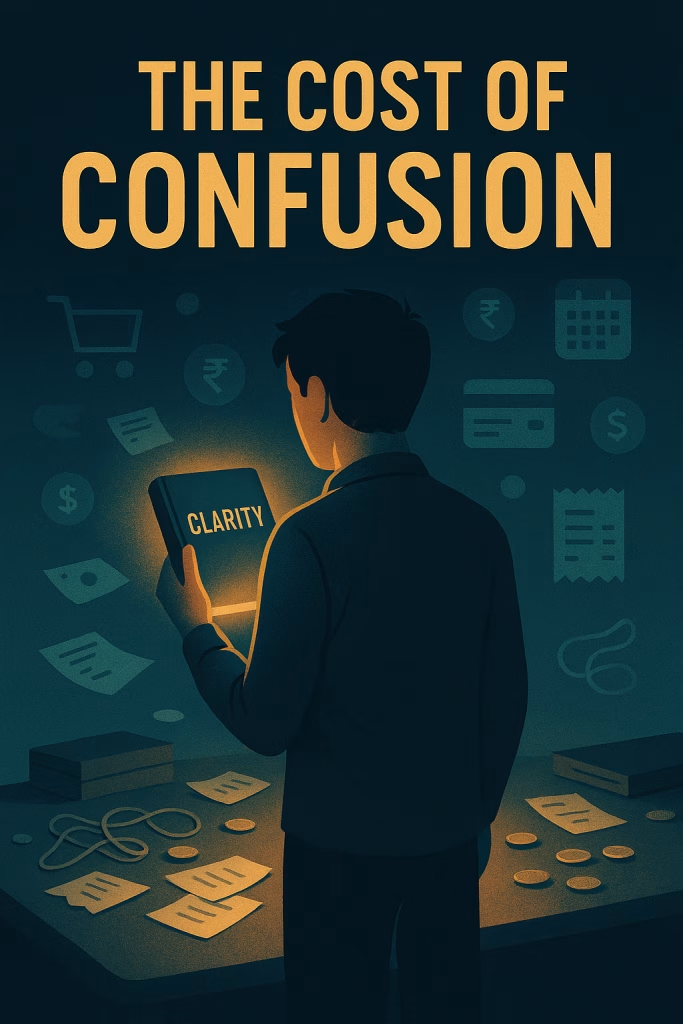
Confusion is expensive. Clarity is wealth.
Also Read: Financial Clarity: The Calm, Simple Habit That Changes the Way You Think About Money
Let me walk you through this slowly, the same way I’d explain it to a younger version of myself… or to a friend sitting across the table with chai.
What “Unclear Money Habits” Really Look Like (And Why They Hide So Well)
The thing about unclear money habits is that they rarely feel dangerous.
They feel ordinary… almost harmless.
A few examples you may secretly relate to:
- Telling yourself you’ll “start tracking expenses next month.”
- Buying something because “it’s been a long week.”
- Adding just one more EMI to the pile.
- Upgrading life when salary goes up, but not savings.
- Saying “we’ll discuss money later” and then never doing it.
None of these are wrong by themselves.
I’ve done all of them. Many times.
The danger comes from repetition.
When unclear money habits repeat silently, they create:
- subconscious spending
- emotional noise
- hidden money leaks
- lifestyle inflation
- guilt after purchases
- an uneasy feeling around checking bank balances
- money avoidance
You’re not “bad with money.”
You’re just unclear.
And unclear always costs you more.
The Emotional Side: How Confusion Eats Your Peace
Let me share a moment I’ll never forget.
Years ago, a client sat in front of me, a man who earned very well—good job, good perks, everything. But he looked exhausted.
He said, “Sir, I don’t understand. I’m earning more than ever… but I’ve never felt this stressed about money.”
That line stuck with me for years.
Because he wasn’t struggling financially.
He was struggling emotionally.
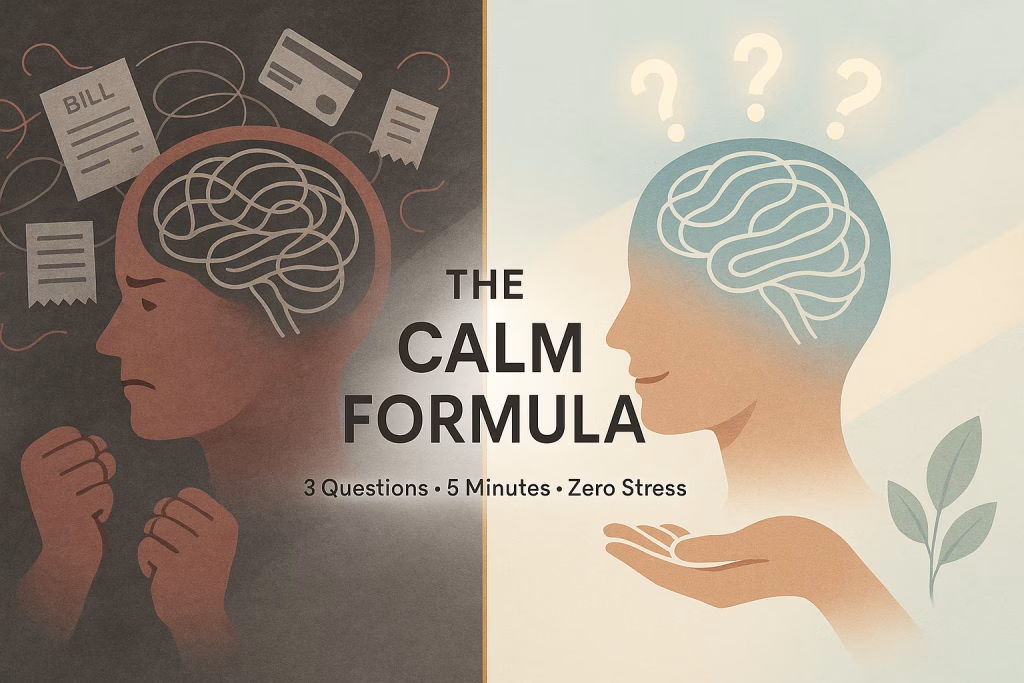
Unclear money habits create mental fog.
You don’t know if you’re doing enough.
You don’t know whether you’re saving or leaking.
You don’t know what your money story even looks like.
A cluttered mind leads to cluttered decisions.
And cluttered decisions lead to regret spending, impulsive buys, and that uneasy, quiet guilt so many people carry.
When your mind is tired, you spend more.
When you’re stressed, you spend for relief.
When you’re confused, you avoid money decisions altogether.
That emotional cost is far greater than the financial one.
How Unclear Money Habits Actually Drain Wealth (The Quiet Ways)
Unclear money habits don’t drain wealth loudly.
They drain it through tiny holes you don’t see at first.
Here are the big ones:
1. Quiet Monthly Leaks
Things like:
- forgotten subscriptions
- convenience fees
- ordering food when you’re too tired
- ATM withdrawals with charges
- “small” impulse purchases
Each one seems harmless.
Together, they’re corrosive.
2. Emotional Spending Patterns
We spend to feel better—joy, relief, boredom, even loneliness.
When you connect spending with emotions, money becomes a coping mechanism instead of a tool.
3. Lifestyle Upgrades
Salary goes up → spending goes up → peace goes down.
Lifestyle inflation is one of the biggest silent drains I’ve seen.
4. Multiple EMIs
I’ve seen homes where 4–6 EMIs stack up like dominos.
Each one individually “manageable,” but together… exhausting.
5. No Surplus Awareness
Most people genuinely don’t know how much they save monthly.
They guess.
And guessing is the birthplace of unclear money habits.
5 Clear Signs You’re Living With Unclear Money Habits
These signs are simple, but brutally honest:
✔ 1. You can’t say your monthly surplus without checking
If you don’t know your exact leftover money, confusion is already controlling your financial behaviour.
✔ 2. You avoid money conversations
Avoidance = fear + confusion.
✔ 3. You feel uneasy before checking your bank balance
This is more common than you’d think.
✔ 4. End of the month arrives, and you genuinely don’t know where money went
Not knowing is a symptom of unclear money habits.
✔ 5. You make money decisions based on mood, not clarity
Mood-driven money is dangerous money.
Why Clarity Matters More Than Financial Planning
Here’s something most financial planners won’t say out loud:
A plan without clarity is useless.
People come for SIPs, insurance, budgeting templates… but they haven’t understood their own behaviour yet.
You don’t fix unclear money habits with a planner.
You fix them with awareness.
When clarity enters your financial life:
- your emotional spending reduces
- your confidence increases
- you make fewer impulse purchases
- tracking feels effortless
- money conversations become calmer
- future planning becomes possible
Planning works when clarity exists.
Not before.
The “Clarity Reset”: A 3-Step System That Works in Real Life
This is the exact framework I’ve used personally and shared with many people.
It’s simple. It’s uncomfortable. And it works.
STEP 1: A 15-Minute Reality Check
Not a fancy audit… just honesty.
Take the last 30 days of:
- bank statements
- UPI payments
- credit card bills
Look for:
- unnecessary spends
- emotional spikes
- repeat expenses
- lifestyle creep
- late-night purchases
- fast-food patterns
It stings at first.
But clarity always begins with discomfort.
STEP 2: The 3 Buckets Method
Put every expense into:
Needs
Your essentials—rent, groceries, bills, EMIs.
Wants
Everything emotional—shopping, eating out, entertainment.
Future
SIPs, emergency fund, long-term investments.
Just this one exercise exposes a lifetime of unclear money habits.
STEP 3: A Weekly “Calm Check-In”
Every Sunday, 10 minutes:
Ask yourself:
- What did I spend?
- Why did I spend?
- How did I feel before buying?
- What can I adjust for next week?
This is where emotional spending breaks.
This is where new habits begin.
Clarity grows slowly, but the change is massive.
How To Make Clear Money Habits Stick (Long Term)
Consistency is the real challenge.
Here’s what helps:
1. Don’t overcomplicate your system
The simpler it is, the longer it lasts.
2. Automate savings and bills
Automation removes confusion from the equation.
3. Talk openly with your partner
Most financial stress in relationships comes from silence, not spending.
4. Use the “24-Hour Rule”
If you’re about to buy something you don’t need… wait a day.
Clarity shows up with time.
5. Track only 3 numbers
- monthly income
- monthly total spend
- monthly surplus
That’s it.
Remove the noise.
The Real Ending: Clarity Is the Wealth You Don’t See at First
Most of us think wealth begins with income.
But income without clarity becomes stress.
Wealth begins when you understand your habits.
When you catch emotional patterns.
When you stop letting confusion run the show.
When you choose to be honest about where money is really going.
Unclear money habits don’t ruin your life overnight.
They drain it slowly—one small decision at a time.
But the opposite is true too.
Clear habits restore your life slowly—one honest step at a time.
Clarity isn’t complicated.
It’s not dramatic.
It’s not loud.
It’s a small, steady decision to see things as they are.
And once clarity enters your financial life, your money—your peace, your confidence, your future—finally begins to make sense.